Alliums! Health benefits to rock your world!
WHAT ARE ALLIUM VEGETABLES?
Allium vegetables are a group of vegetables that belong to the Allium genus, which is characterized by their distinctive aroma and flavor due to the presence of sulfur-containing compounds. These vegetables are commonly used in various cuisines around the world and include:
1. Onions:
Onions are one of the most widely used allium vegetables. They come in various colors, including white, yellow, and red, and are used in a wide range of savory dishes, from soups and salads to stir-fries and casseroles.
2. Garlic:
Garlic is known for its strong and pungent flavor. It is used in countless recipes and is often used to add depth of flavor to dishes, both raw and cooked.
3. Leeks:
Leeks have a milder and sweeter flavor compared to onions and are often used in soups, stews, and as a garnish.
4. Scallions (Green Onions):
Scallions are mild and have a green stalk and white bulb. They are commonly used as a garnish for various dishes and are a key ingredient in many Asian cuisines.
5. Shallots:
Shallots have a mild, sweet, and delicate flavor. They are often used in dressings, sauces, and as a seasoning for various dishes.
6. Chives:
Chives have a mild, onion-like flavor and are often used as a garnish for salads, baked potatoes, and as a flavoring herb in various dishes.
7. Ramps:
Ramps, also known as wild leeks, have a strong garlic-onion flavor and are foraged in the spring. They are popular in some regional cuisines.
8. Elephant Garlic:
Elephant garlic has a milder taste than regular garlic and produces large cloves. It's often roasted or used in dishes where a subtle garlic flavor is desired.
9. Chinese Garlic Chives:
These have a garlicky flavor and are used in Chinese cuisine, particularly in stir-fries and dumplings.
WHAT ARE THE HEALTH BENEFITS OF ALLIUM VEGETABLES?
Allium vegetables are not only prized for their culinary uses but also for their potential health benefits. They are rich in antioxidants and sulfur compounds, which are believed to have various health-promoting properties. Here are some of the health benefits associated with the consumption of allium vegetables.
1. Antioxidant Properties:
Allium vegetables are rich in antioxidants, including flavonoids and sulfur compounds like allicin. These antioxidants help combat oxidative stress and reduce the risk of chronic diseases.
2. Cardiovascular Health:
Allium vegetables may contribute to heart health by lowering blood pressure, reducing cholesterol levels, and improving blood vessel function. Garlic, in particular, has been studied for its potential to lower blood pressure and reduce the risk of heart disease.
3. Anti-Inflammatory Effects:
The sulfur compounds in allium vegetables have anti-inflammatory properties, which can help reduce inflammation in the body. Chronic inflammation is linked to various health problems, including heart disease and certain cancers.¹
4. Immune Support:
Garlic, in particular, is known for its potential to boost the immune system. It contains compounds that may enhance the body's defense mechanisms against infections.
5. Cancer Prevention:
Some studies suggest that regular consumption of allium vegetables may be associated with a reduced risk of certain types of cancer, including stomach, colorectal, and prostate cancer. The sulfur compounds in these vegetables are thought to play a role in this protective effect.
6. Digestive Health:
Allium vegetables, especially leeks, contain prebiotic fibers that can support the growth of beneficial gut bacteria. A healthy gut microbiome is important for digestion and overall health.
7. Bone Health:
Allium vegetables, particularly onions, contain compounds like quercetin and kaempferol, which may help improve bone health and reduce the risk of osteoporosis.
8. Blood Sugar Control:
Some studies suggest that allium vegetables may help regulate blood sugar levels, making them potentially beneficial for individuals with diabetes or those at risk of developing the condition.
WHAT IS ALLICIN?
Many of these health benefits come from a compound called allicin, which is an organosulfur compound. Within about one minute after garlic is chopped or crushed, the enzyme alliinase produces allicin; then allicin is converted to a number of other organosulfur compounds with beneficial antioxidant, anti-inflammatory, and anti-cancer effects.² Other organosulfur compounds are thought to be absorbed intact, and then converted by the body to bioactive compounds.³⁴ The evidence suggests waiting 10 minutes to cook after chopping for the full effect of alliinase.
SUMMARY
In summary, Allium vegetables have many health benefits due to their antioxidant/anti-inflammatory properties. Waiting a few minutes after chopping allium vegetables helps maximize these health benefits.
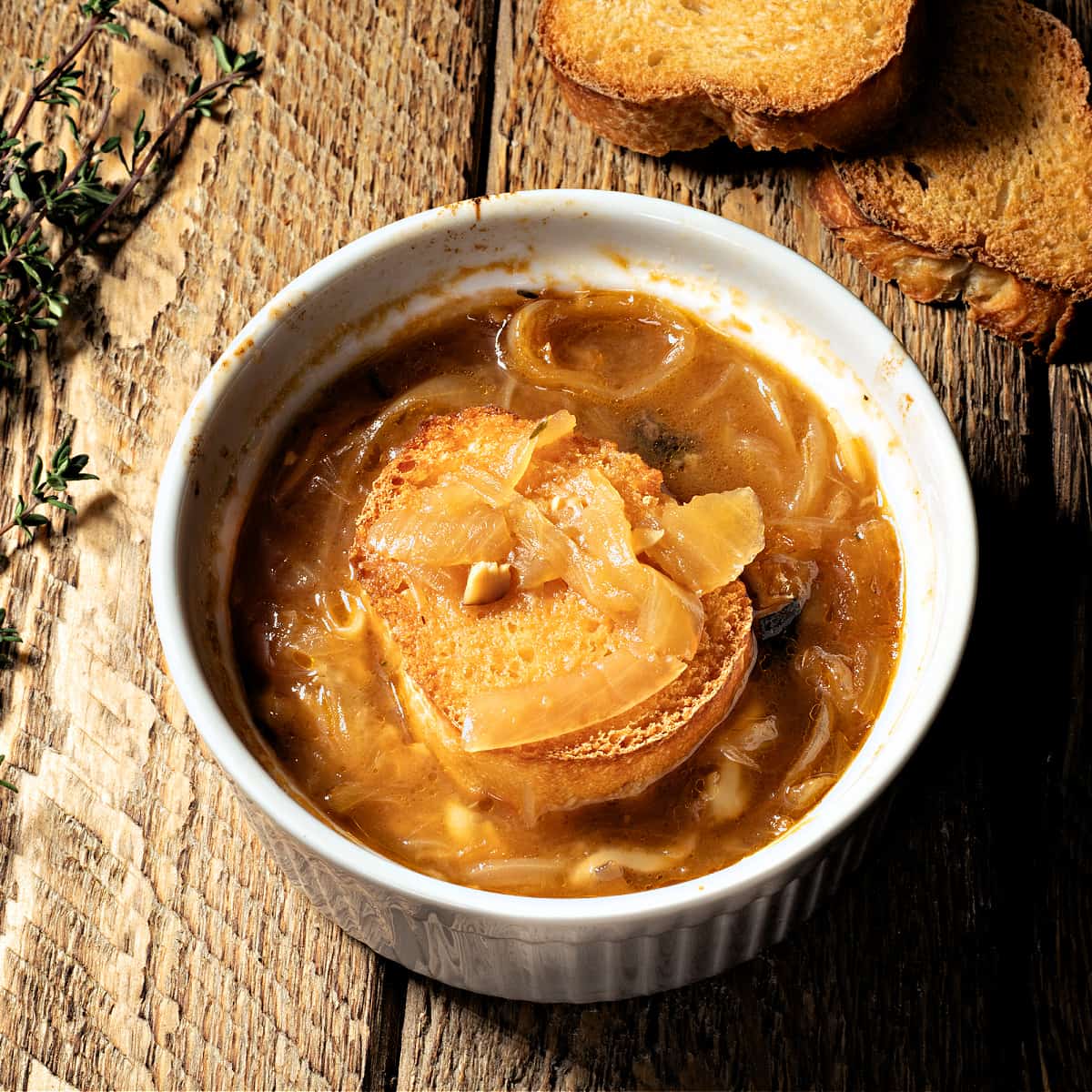
Vegan French Onion Soup
Ingredients:
4 large yellow onions, thinly sliced
2 cloves garlic, minced
6 cups vegetable broth (oil-free)
1/2 cup dry red wine (optional, can be replaced with more broth)
2 tablespoons soy sauce or tamari (for gluten-free option)
1 teaspoon dried thyme
1 bay leaf
Salt and pepper, to taste
4-6 slices of crusty bread sourdough
1 serving of stretchy cheese (recipe below)
Instructions:
In a large pot, add a bit of water or vegetable broth and heat over medium heat. Add the sliced onions and cook, stirring frequently, for about 20-25 minutes, or until the onions are caramelized. Add small amounts of water or broth as needed to prevent sticking.
Add the minced garlic to the caramelized onions and cook for another 1-2 minutes. If using red wine, pour it in now to deglaze the pot, scraping up any browned bits from the bottom.
Add the vegetable broth, soy sauce, thyme, and bay leaf to the pot. Bring to a boil, then reduce the heat and simmer for about 15-20 minutes. Season with salt and pepper to taste.
Toast the bread slices until they are crisp. This can be done in a toaster or in the oven.
Preheat your oven's broiler. Ladle the soup into oven-safe bowls. Place a slice of toasted bread on top of each, and generously scoop on the vegan cheese.
Place the bowls under the broiler for a few minutes, watching closely, until the cheese is melted and bubbly. Be careful as the bowls will be very hot.
Remove from the oven and let sit for a couple of minutes before serving. Be cautious as the soup and bowls will be extremely hot.
Stretchy cheese
¾ cup water
½ cup raw cashews
1 tablespoon white wine vinegar
2 tablespoon nutritional yeast flakes
1 tablespoon cornstarch or arrowroot powder
1/2 teaspoon salt
Add all of the ingredients to a blender and process on high until smooth.
Now, pour the mixture into a saucepan. Begin slowly heating and whisking together as it warms. Please do not walk away from the stovetop! It needs to be stirred constantly until you reach the desired stretchiness and may burn if you do not stay on top of it.
Take off stove top and scoop in to your French Onion Soup bowls.
Thanks to Terri Edwards for your inspiration!
Serves 4
To watch this video on YouTube: https://tinyurl.com/3zrd5tun
Want to learn more from the Doc & Chef? Get the medical guidance, practical cooking skills, and supportive community you need to finally succeed with plant-based living—without the confusion or overwhelm. Join the community today


© 2025 The Center for Plant-Based Living. All Rights Reserved.