Am I Getting Enough Protein?
PLANTS HAVE PROTEIN!
One of the most common nutritional misperceptions is that if you follow a plant-based diet, you can’t get enough protein. But guess what, plants have protein! Few nutrients are as important as protein. Not getting enough of it will affect your health and body composition.
WHAT IS PROTEIN, AND WHY IS IT IMPORTANT?
Proteins are the main building blocks of our bodies. They’re used to make bones, muscles, organs, tendons, and skin, as well as enzymes, hormones, and transport molecules. Because our bodies are constantly wearing down and using up things like enzymes and hormones, we must ingest protein to survive. That’s how you build muscle after going to the gym.[1]
HOW MUCH PROTEIN DO WE NEED?
Most official nutritional organizations recommend that the average person needs 0.36 grams of protein per pound (0.8 grams per kg) of body weight a day.
This amounts to about 60 grams per day for a 165-pound sedentary person or 65 grams per day for a 180-pound sedentary person:
If you are athletic, you need more protein. For example, an endurance athlete may need about 0.55 to 0.65 grams of protein per pound (1.2 to 1.4 grams per kg) of body weight a day and a strength trained athlete may need up to may need 0.65 to 0.90 grams of protein per pound (1.4 to 2.0 grams per kg) of body weight a day.[2]
WHAT HAPPENS IF WE GET TO MUCH PROTEIN?
Despite our obsession with not getting enough protein, the average person in the US consumes TWICE as much protein as they need![3]
Unlike extra carbohydrates and fats, which we can store for future use, we can not store extra protein. Any extra protein we consume is converted to nitrogen, which is then excreted by the kidneys. So, the overconsumption of protein is associated with an increased risk for kidney disease.[4]
Also, because protein stimulates growth hormones, excess protein consumption is associated with an increased risk of cancer. In fact one study showed that for people aged 50 to 65, a high-protein diet increased the risk of cancer fourfold, comparable to the risk associated with smoking!
That same study showed that middle-age people who ate foods rich in animal proteins were 75 percent more likely to die of any cause than those who ate a low-protein diet. Interestingly, the link between high protein intake went away when the participates consumed mainly plant-based proteins, probably because they don’t stimulate growth factors the same way that animal derived proteins do.[5]
WHAT HAPPENS IF YOU DON’T GET ENOUGH PROTEIN?
People can become protein deficient but this is typically due to an overall calorie deficiency. Its severest form, called kwashiorkor, is most commonly seen in developing countries and characterized by swelling in the legs, loss of muscle mass and an enlarged abdomen.[6] Although uncommon in the Western world, there are some populations that may be at risk, including people who follow extreme diets, patients with prolonged chronic illness or institutionalized elderly patients.
SUMMARY
Plants have protein, and you can get all the protein you need from eating pants, as long as you are consuming enough calories, even if you are an athlete. Most Amercians consume too much protein, mostly from animal sources, which can increase the risk for kidney disease and cancer. Severe protein deficiency is rare in developed countries.
[1] https://www.healthline.com/nutrition/functions-of-protein
[2] J Acad Nutr Diet 2016;116:501-528.
[3] Nutrients. 2015 Aug 21;7(8):7058-69.
[4] J Am Soc Nephrol. 2020 Aug;31(8):1667-1679
[5] Cell Metab. 2014 Mar 4;19(3):407-17
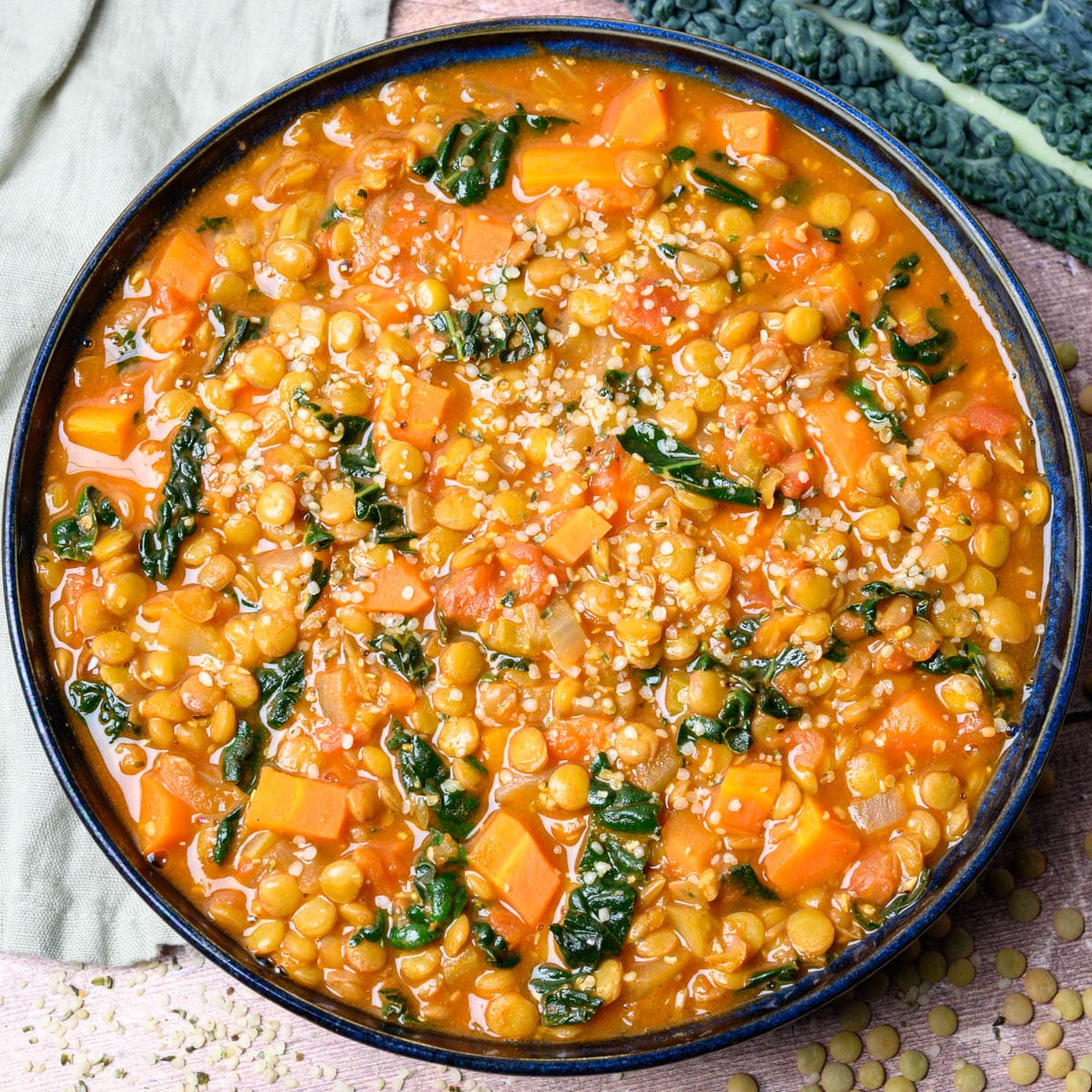
LENTIL SOUP RECIPE
1 yellow onion, chopped small
1 rib of celery, cut lengthwise and then cut to 1/2" pieces
2 carrots, peeled and cut to 1/2" pieces
3 cloves of garlic, minced
1 1/2 teaspoon ground cumin
1 teaspoon coriander
freshly ground black pepper to taste
pinch of salt, optional
2 red potatoes (do not peel), cut to 1/2"-3/4" chunks
1 cup brown lentils
4 cups vegetable broth
5 ounces baby spinach
1 large lemon, squeezed
Directions
To a preheated large soup pot / dutch oven, add the onion, celery and onion.
Begin stirring and continue to do so until you add the broth.
Pull the heat down to medium-high and continue to cook the vegetables until the onions become translucent (about 5-6 minutes).
Next, add the garlic and continue to stir. When the garlic becomes fragrant (about 1 minute of cooking), add the cumin, coriander, salt and pepper. Coat the vegetables well with the spices. Add the potatoes, continue to coat by stirring. Add the lentils and the broth.
Cover pot. Bring the soup to a boil and then down to a simmer. Cook for 25-30 minutes.
Test lentils for doneness. You want them soft and easy to eat - al dente beans will be hard to digest.
Turn off the heat and add all of the spinach, it will wilt quickly.
Squeeze the lemon just before serving. Enjoy!!
Serves 4
Want to learn more from the Doc & Chef? Get the medical guidance, practical cooking skills, and supportive community you need to finally succeed with plant-based living—without the confusion or overwhelm. Join the community today


© 2025 The Center for Plant-Based Living. All Rights Reserved.