Can Spicy Foods Actually Improve Your Health? 🌶️
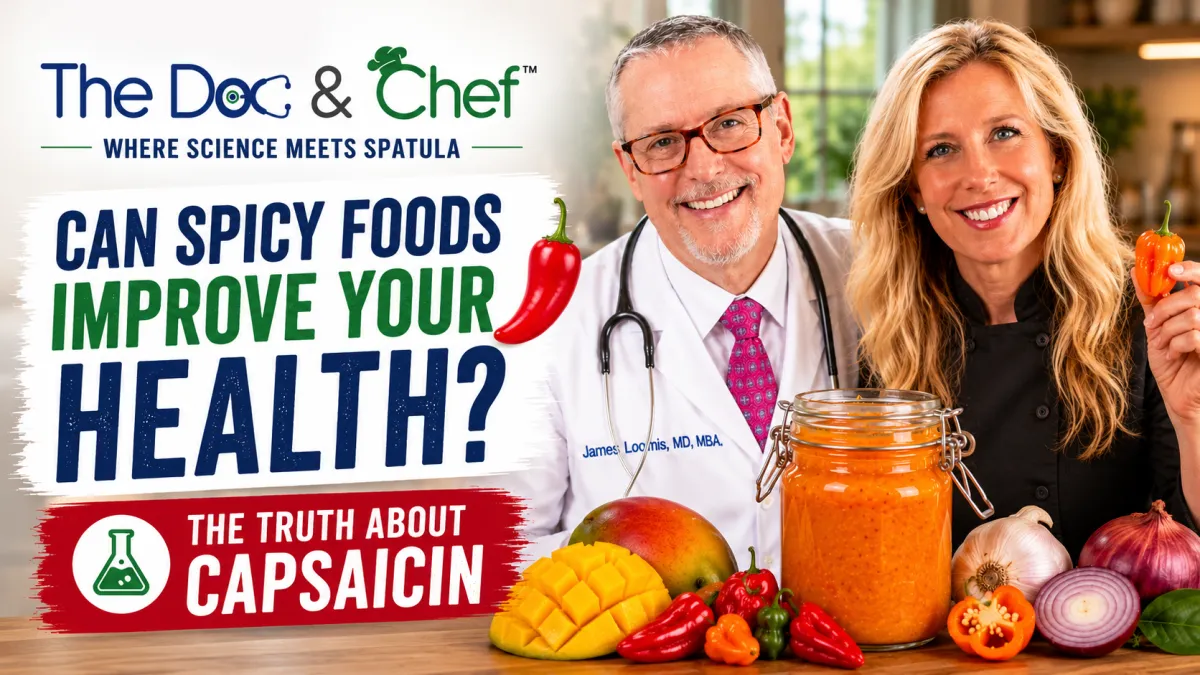
Click the image above to watch the episode!
Capsaicin is the active compound found in chili peppers that gives them their characteristic heat or spiciness. It's a chemical irritant for mammals, including humans, and produces a burning sensation in any tissue it comes in contact with. Capsaicin binds to receptors in the mouth and throat that are responsible for sensing heat and pain, which is why eating spicy foods can cause a sensation of heat or burning.
Capsaicin has several uses and benefits:
Culinary Uses: It is widely used in cooking to add heat to dishes. Different peppers contain varying levels of capsaicin, which determine their spiciness.
Medicinal Uses: Capsaicin is used in topical ointments and patches for pain relief, particularly for conditions like arthritis, muscle pain, and nerve pain. It works by reducing the amount of substance P, a chemical that carries pain messages to the brain.
Weight Loss: Some studies suggest that capsaicin can help boost metabolism and promote fat burning, which can aid in weight loss.
Deterrents: It is used in pepper sprays for self-defense and as a deterrent in animal repellents.
Health Benefits: Capsaicin has been studied for its potential anti-inflammatory, antioxidant, and anticancer properties.
Capsaicin is primarily found in chili peppers, which are part of the Capsicum genus.
Here are some common plants that contain capsaicin:
Bell Peppers (Capsicum annuum): Although bell peppers themselves are not spicy and contain very low levels of capsaicin, the species includes varieties like jalapeños, serranos, and cayenne peppers, which are spicy.
Jalapeño (Capsicum annuum): A popular medium-hot chili pepper used in many cuisines.
Serrano Pepper (Capsicum annuum): Known for its bright, sharp flavor and significant heat.
Cayenne Pepper (Capsicum annuum): Often used in powdered form, cayenne peppers are very hot.
Habanero (Capsicum chinense): Extremely hot pepper known for its fruity flavor and intense heat.
Scotch Bonnet (Capsicum chinense): Similar in heat to the habanero, commonly used in Caribbean cuisine.
Ghost Pepper (Bhut Jolokia, Capsicum chinense): Once considered the hottest pepper in the world, it has a very high capsaicin content.
Carolina Reaper (Capsicum chinense): Currently one of the hottest peppers in the world, with extremely high levels of capsaicin.
Thai Pepper (Capsicum annuum): Small but very hot, commonly used in Southeast Asian cuisines.
Piri Piri (Capsicum frutescens): Also known as African bird's eye chili, it's used in African and Portuguese dishes.
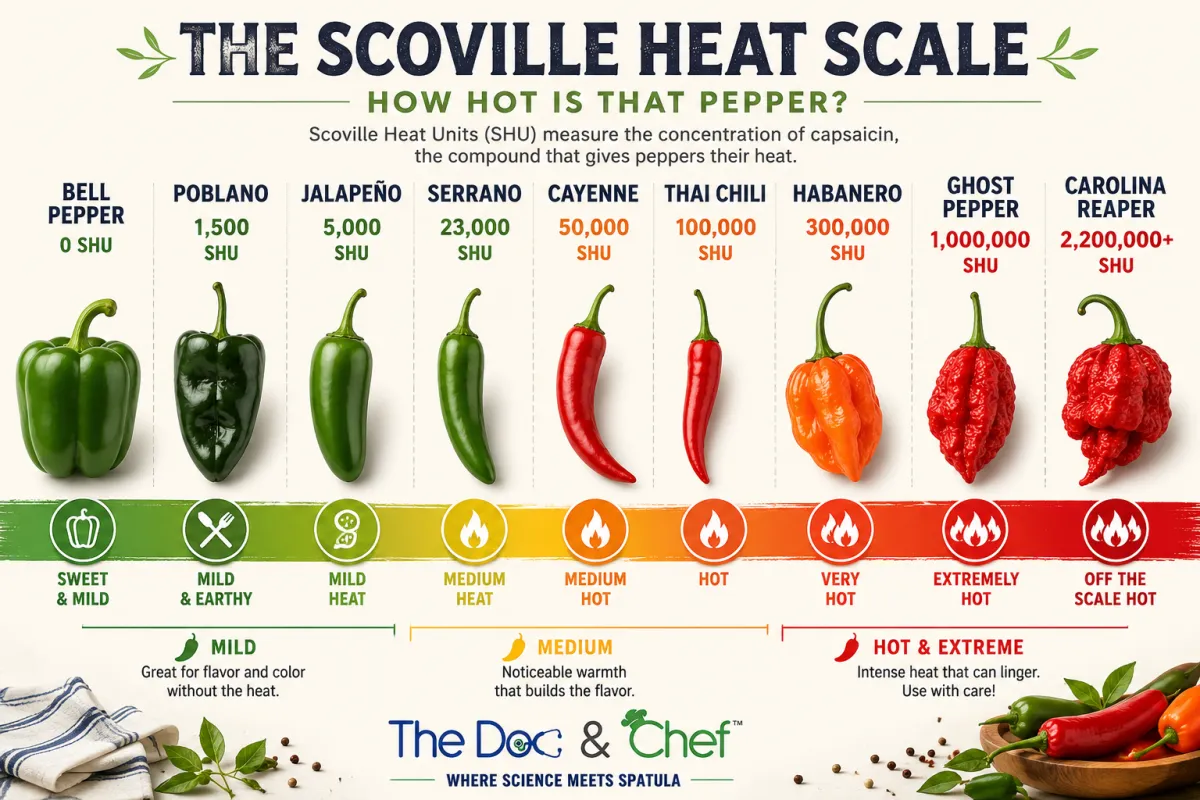
The heat in a chili pepper is measured using the Scoville Scale, which quantifies the spiciness or heat of peppers and other spicy foods. The scale is named after its creator, Wilbur Scoville, an American pharmacist. Here's how the measurement process works:
Scoville Organoleptic Test: Originally, the Scoville Heat Unit (SHU) was determined through a sensory test. In this test, a solution of the pepper extract is diluted in sugar water and given to a panel of tasters. The dilution continues until at least three out of five tasters can no longer detect the heat. The degree of dilution gives the measure of the pepper's heat. For example, if a pepper's extract has to be diluted 1,000 times before the heat is undetectable, it rates at 1,000 Scoville Heat Units.
High-Performance Liquid Chromatography (HPLC): Today, a more scientific method called high-performance liquid chromatography (HPLC) is used. This method measures the concentration of capsaicinoids, the compounds responsible for the heat in peppers. The results are then converted into Scoville Heat Units using a mathematical formula. This method provides a more accurate and consistent measurement than the subjective sensory test.
Scoville Heat Units (SHU) for Common Peppers
Bell Pepper: 0 SHU
Banana Pepper: 0–500 SHU
Poblano Pepper: 1,000–1,500 SHU
Jalapeño: 2,500–8,000 SHU
Serrano: 10,000–23,000 SHU
Cayenne Pepper: 30,000–50,000 SHU
Habanero: 100,000–350,000 SHU
Ghost Pepper (Bhut Jolokia): 800,000–1,041,427 SHU
Carolina Reaper: 1,400,000–2,200,000 SHU
The Scoville Scale provides a practical way to understand and compare the heat levels of different chili peppers and spicy foods.
The health benefits of capsaicin include:
Pain Relief: Capsaicin is used in topical ointments and patches to alleviate pain by reducing the amount of substance P, a neuropeptide that transmits pain signals to the brain.
Anti-Inflammatory Properties: Capsaicin has anti-inflammatory effects, which can help reduce inflammation and pain in conditions like arthritis.
Weight Loss and Metabolism Boost: Capsaicin can increase metabolism and promote fat burning, aiding in weight loss efforts.
Cardiovascular Health: Capsaicin may help lower blood pressure and improve blood flow, contributing to better cardiovascular health.
Cancer Prevention: Some studies suggest that capsaicin has anti-cancer properties and can inhibit the growth of certain types of cancer cells.
Digestive Health: Capsaicin can stimulate digestion and reduce the risk of gastric ulcers by promoting the secretion of digestive juices and mucus.
Antioxidant Properties: Capsaicin acts as an antioxidant, helping to protect cells from damage caused by free radicals.
Respiratory Health: Capsaicin may help relieve congestion and improve respiratory function by acting as a decongestant.
Antimicrobial Effects: Capsaicin has been shown to have antimicrobial properties, which can help fight infections and bacteria.
Improved Insulin Sensitivity: Capsaicin may enhance insulin sensitivity, which is beneficial for managing blood sugar levels and preventing diabetes.
While capsaicin has many health benefits, it also comes with potential health risks, especially when consumed in large quantities or applied improperly. Here are some of the health risks associated with capsaicin:
Gastrointestinal Issues: Consuming large amounts of capsaicin can cause stomach pain, nausea, vomiting, and diarrhea. It can also irritate the lining of the stomach and intestines.
Skin Irritation: Topical capsaicin products can cause skin irritation, burning, and redness, particularly if used excessively or on sensitive skin.
Respiratory Issues: Inhalation of capsaicin-containing powders or aerosols can lead to coughing, sneezing, throat irritation, and in severe cases, respiratory distress.
Eye Irritation: Capsaicin can cause severe burning and irritation if it comes into contact with the eyes.
Allergic Reactions: Some people may have allergic reactions to capsaicin, resulting in symptoms such as hives, itching, swelling, and difficulty breathing.
Exacerbation of Acid Reflux: Capsaicin can worsen acid reflux symptoms and cause heartburn.
Contact Dermatitis: Repeated exposure to capsaicin, particularly in occupational settings, can lead to contact dermatitis, characterized by itching, redness, and swelling.
Increased Pain Sensitivity: Overuse of capsaicin creams or patches can sometimes lead to increased pain sensitivity (hyperalgesia) in the affected area.
Potential Drug Interactions: Capsaicin may interact with certain medications, such as blood thinners and blood pressure medications, potentially affecting their efficacy or causing adverse effects.
It's important to use capsaicin-containing products according to the instructions and to consult with a healthcare professional before starting any new supplement or treatment, especially for individuals with preexisting health conditions or those taking other medications.
Tropical Heat Mango Mustard Hot Sauce
Ingredients
5 habanero peppers, chopped (or more if you dare!)
2 ripe mangoes, peeled and chopped
1 small white onion, chopped (about ¾ cup)
¼ cup yellow or brown mustard
½ cup apple cider vinegar
4 cloves garlic, chopped
2 tablespoons brown sugar
1 tablespoon curry powder
1 teaspoon cumin
½ teaspoon allspice
1 teaspoon ginger powder
1 teaspoon salt Instructions
Add all ingredients to a food processor and blend until completely smooth. Pour into a saucepan and bring to a boil. Reduce heat and simmer for about 10 minutes. Allow to cool before transferring to clean glass bottles or jars.
Want to learn more from the Doc & Chef?
Get the medical guidance, practical cooking skills, and supportive community you need to finally succeed with plant-based living, without the confusion or overwhelm. Join the community today.


© 2025 The Center for Plant-Based Living. All Rights Reserved.