Meat eaters look great!

Click the image above to watch the episode!
WHAT ARE PROCESSED MEATS
Processed meats are meat products that have been modified through various methods such as curing, smoking, salting, or adding preservatives to extend their shelf life or enhance their flavor. These meats are typically not consumed fresh but are instead treated to improve taste, texture, or preservation. Common examples of processed meats include:
1. Bacon: Pork belly or back cuts that are cured and smoked.
2. Sausages: Ground meat (such as pork, beef, chicken, or a combination) mixed with spices and often encased in a casing.
3. Ham: Pork that has been wet or dry cured, smoked, or both.
4. Salami: A type of fermented sausage, typically made from beef, though other meats can be used, and flavored with various herbs and spices.
5. Hot Dogs: A mixture of various meats (often beef and pork), along with additives and preservatives, stuffed into a casing.
6. Pepperoni: A popular topping for pizzas, made from beef and pork and seasoned with paprika and chili pepper.
7. Jerky: Lean cuts of meat (often beef, but also pork, turkey, or other meats) that have been dried and sometimes flavored.
8. Corned Beef: Beef brisket that has been salt-cured and often seasoned with spices.
9. Pastrami: Usually made from beef (typically brisket or round), which is brined, seasoned with various spices, and then smoked.
10. Bologna: A type of sausage made from finely ground meat, often a combination of pork, beef, and other ingredients, which is then cooked and smoked.
WHAT ARE THE HEALTH RISKS ASSOCIATED WITH CONSUMING PROCESSED MEATS
Consuming processed meats has been associated with several health risks. These risks are primarily attributed to the methods of processing and the additives used in these products. Here are some of the main health concerns associated with the consumption of processed meats:
1. Cancer Risk: Perhaps the most significant concern is the link between processed meat consumption and an increased risk of cancer, particularly colorectal cancer. The International Agency for Research on Cancer (IARC), which is part of the World Health Organization (WHO), has classified processed meats as Group 1 carcinogens, meaning there is sufficient evidence to conclude that they can cause cancer. The chemicals formed during the processing of meats, such as nitrates and nitrites, can potentially contribute to the development of cancer.
2. Cardiovascular Disease: Processed meats are often high in saturated fats and sodium, which can contribute to the development of cardiovascular diseases, including heart disease and stroke. High sodium intake can lead to high blood pressure (hypertension), a significant risk factor for heart-related issues.
3. Type 2 Diabetes: Some studies have suggested that a high intake of processed meats may be associated with an increased risk of type 2 diabetes. The additives and preservatives used in these products, along with their high fat content, may contribute to insulin resistance and other metabolic problems.
4. Weight Gain and Obesity: Processed meats are calorie-dense and can contribute to excess calorie intake when consumed in large quantities. Overconsumption of calorie-dense foods is a risk factor for weight gain and obesity, which are linked to various health problems.
5. High Sodium Intake: Processed meats are often heavily salted, and excessive sodium intake can lead to high blood pressure, which is a risk factor for heart disease and stroke. High sodium intake is also associated with an increased risk of stomach cancer.
6. Preservatives and Additives: Many processed meats contain additives and preservatives such as sodium nitrate and sodium nitrite. Sodium nitrite is used as an additive for 3 reasons:
To preserve the red/pink color of meat.
To improve flavor by suppressing fat oxidation (rancidification).
To prevent the growth of bacteria, improving flavor and cutting the risk of food poisoning.
Nitrite in processed meat can turn into harmful N-nitroso compounds,, which are known carcinogens.
Smoke-cured meats are those that have been preserved and flavored through the process of smoking. While they can be delicious and have a distinct smoky flavor, there are some potential health risks associated with consuming smoke-cured meats:
1. Polycyclic Aromatic Hydrocarbons (PAHs): During the smoking process, meat can be exposed to smoke, which contains polycyclic aromatic hydrocarbons (PAHs). PAHs are chemical compounds that can form on the surface of smoked meats. Some PAHs are known to be carcinogenic and can increase the risk of cancer, particularly when consumed in large quantities over an extended period.
2. Heterocyclic Amines (HCAs): When smoke-cured meats are cooked at high temperatures, such as grilling or frying, they can produce heterocyclic amines (HCAs). HCAs are another group of potentially carcinogenic compounds that may increase the risk of cancer when consumed regularly and in large amounts.
Also, eating high amounts of processed meat is more common among people with unhealthy lifestyle habits. As an example, smoking is more common among those who eat lots of processed meat. Their intake of fruit and vegetables is also much lower.
SUMMARY
In summary, processed meat consumption is associated with an increased risk of several chronic diseases, including cancer, heart disease, type 2 diabetes and obesity and should be avoided.
[1] Int J Cancer. 2006 Aug 15;119(4):915-9.
[2] Cancer Causes Control. 2013 Apr;24(4):611-27.
[3] BMC Med. 2013 Mar 7;11:63.
[4] Diabetes Care. 2020 Feb;43(2):265-271
[5] BMC Res Notes. 2022 Nov 1;15(1):339.
[6] Am J Med. 2012 May;125(5):433-9.
[7] Eur J Cancer Prev. 2011 Mar;20(2):132-9.
[8] Food Addit Contam. 1988 Oct-Dec;5(4):587-95.
[9] Chemosphere. 2022 Jun;296:133948
[10] Cancer. 2009;61(4):437-46.
[11] Int J Behav Nutr Phys Act. 2005 Apr 13;2(1):4.
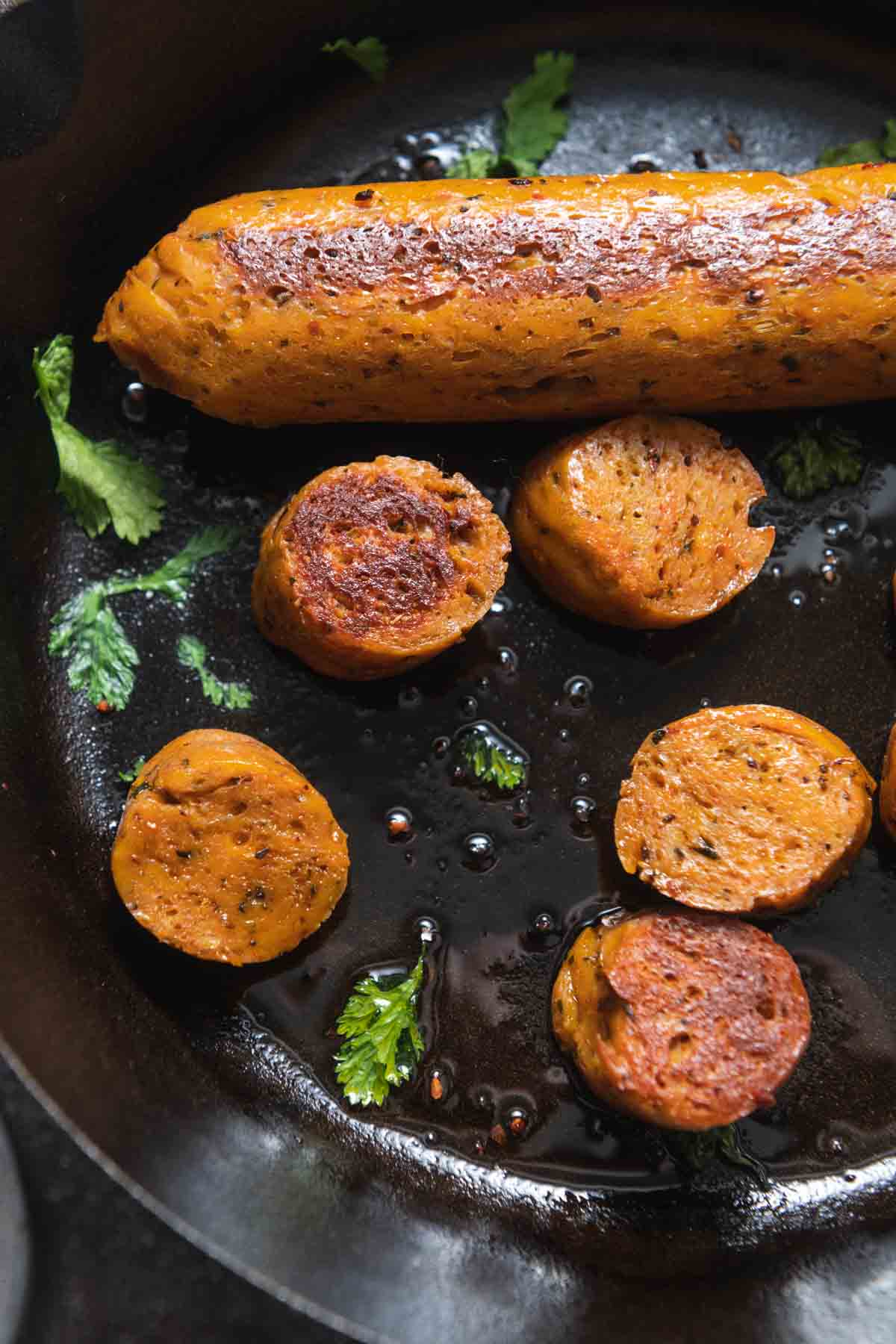
Italian Sausage
· 1/2 cup cooked white beans (great northern or navy), rinsed and drained
· 1 cup vegetable broth
· 1 tablespoon tomato paste
· 2 tablespoons soy sauce (coconut aminos)
· 1 1/4 cups vital wheat gluten
· 1/4 cup nutritional yeast
· 1 teaspoon granulated garlic
· 2 1/2 teaspoons fennel seed, crushed
· 1/2 teaspoon red pepper flakes
· 1 1/2 teaspoon sweet paprika
· 1 1/2 teaspoon dried oregano
· 1/2 teaspoon dried thyme
· Several dashes fresh black pepper
Instructions
Before mixing your ingredients, get the steaming apparatus with a lid ready, bringing water to a full boil. Make sure the pot is deep enough to continuously steam for 40 minutes. The rest of the recipe comes together very quickly.
Have ready 4 square sheets of tin foil (and equal sizes of parchment if you prefer).
In a large bowl, mash the beans well with a fork. Throw all the other ingredients together in the order listed and mix with your hands. This is quick, no need to knead for a long time.
Divide dough into 4 even parts (an easy way to do this: split the dough in half and then into quarters). Place one part of dough into tin foil and mold into about a 5-inch log. Wrap dough in tin foil, like a tootsie roll. (Or, optionally, place one piece of parchment on top of one piece of foil so that the foil is not directly cooking against your sausage.)
Don’t worry too much about shaping it, it will snap into shape while it’s steaming.
Place wrapped sausages in a steamer, cover it well, and steam for 40 minutes. That’s it!
Adapted from Post Punk Kitchen
Want to learn more from the Doc & Chef? Get the medical guidance, practical cooking skills, and supportive community you need to finally succeed with plant-based living—without the confusion or overwhelm. Join the community today.


© 2025 The Center for Plant-Based Living. All Rights Reserved.